Driveway Sealcoating and Crack Filling in South Bend, IN
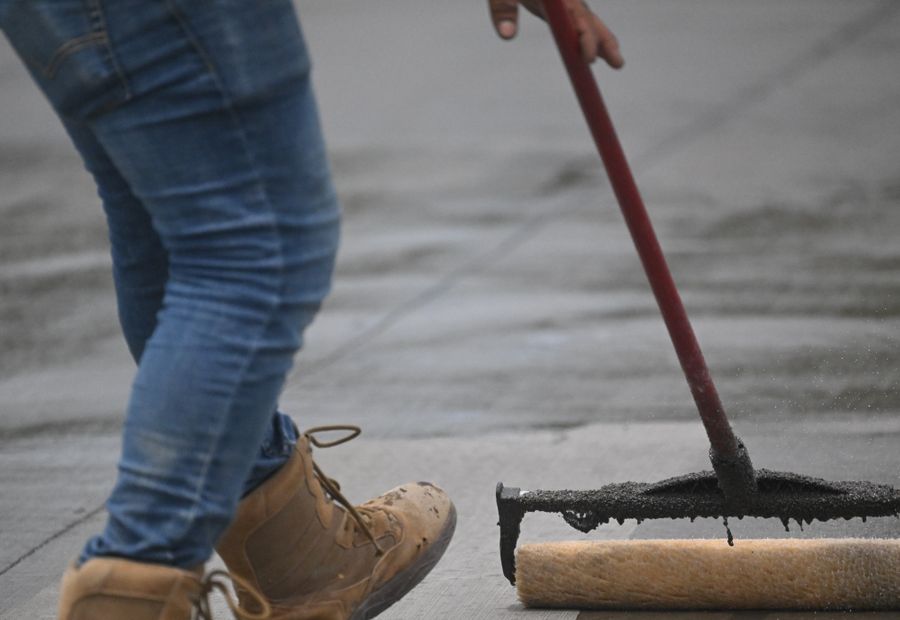
South Bend Driveway Paving sealcoats asphalt driveways and fills cracks, alongside driveway replacement, resurfacing, patching, new paving, gravel conversions, extensions and aprons, and parking lot work. We look after driveways for homeowners, landlords, and HOA boards in South Bend, Mishawaka, Granger, Osceola, and around St. Joseph County, Indiana.
We apply asphalt emulsion sealer, which is the type most residential drives take now, worked in by squeegee so it presses into the surface texture rather than sitting on it. Cracks get filled first with hot rubberized crack filler. Sealer does one job well. It keeps water and ultraviolet light off a surface that is still structurally sound, and it puts the color back. It does not add strength, it does not carry load, and it does not bridge a gap. That is the description, and it is why we quote it as maintenance instead of as a fix.
What Sealer Is Actually Protecting
Asphalt is stone held together by binder. Sun and oxygen work on that binder, and the surface gradually goes gray and starts releasing loose stone. Water works from the other direction, into any opening it finds. A coat of sealer slows both. Nothing more than that.
The Two to Three Year Interval
Snow sits on driveways here for months at a stretch, and the surface freezes and thaws over and over between November and March. That earns a driveway a coat every second or third year. It does not earn one every spring. Sealer stacked coat on coat goes brittle and starts letting go in sheets, which looks far worse than gray asphalt.
Cracks First, Always
Cracks get routed and filled before any sealer goes down. Do it the other way around and you have sealed everything except the openings that actually let water into the base. The filler needs a clean, dry crack to bond to, so the prep is most of the labor on this job.
Squeegee or Spray
A squeegee pushes material down into the surface and leaves a heavier, more even film. Spray covers ground faster and suits large open areas. On a residential drive we squeegee, because the coverage is better where the surface is worn and open.
When We Will Tell You Not To
If the drive is cracked into a connected web, if it is rutted, or if water stands on it, sealer is the wrong purchase. It hides the pattern that tells you what is happening below the surface, and it hides it for about a year. We would rather price the repair or the replacement and let you decide with the evidence still visible.
Cure Time and Booking
Keep off it through the cure, generally a day for foot traffic and longer before parking on it, and longer again in cool or damp weather. Sealing season runs through the warm months. Call (574) 555-0148 and we will tell you whether your driveway is ready for a coat.
How often should a driveway be sealcoated?
Every two to three years suits this climate, where snow sits on a driveway for months and the surface goes through melt and refreeze all winter. Watch the surface rather than the calendar. When the black has gone gray and the individual stones start showing at the top, it is time. Sealing on a yearly schedule is not extra protection, it is extra thickness that eventually fails on its own.
Why does sealer peel off in sheets?
Because too much of it went on, usually from sealing every year for several years running. Each coat bonds to the coat below rather than to the asphalt, and that stack gets thick and brittle. Once it cracks, water gets behind it and lifts whole sheets away. A driveway in that condition needs the loose material removed before anything new goes down, and it needs a longer gap between coats after that.
How soon can a new driveway be sealed?
Give it roughly six months to a year. Fresh hot mix still holds light oils that need to work their way out, and sealing too early traps them, which leaves the surface soft and prone to scuffing where wheels turn. There is no rush anyway. A new driveway has its own protection for the first couple of years. The first coat is about the third season, not the first.
Does sealcoating fix cracks?
No. Sealer is a thin liquid coating and it spans nothing. Anything wide enough to take a fingernail needs filling before the sealer goes on, never after, or the sealer just drapes into the crack and splits again. And on a surface broken into a connected web, sealer is a fresh black finish over a driveway whose base has already failed. We will say so rather than take the job.