Asphalt Resurfacing and Overlays in South Bend, IN
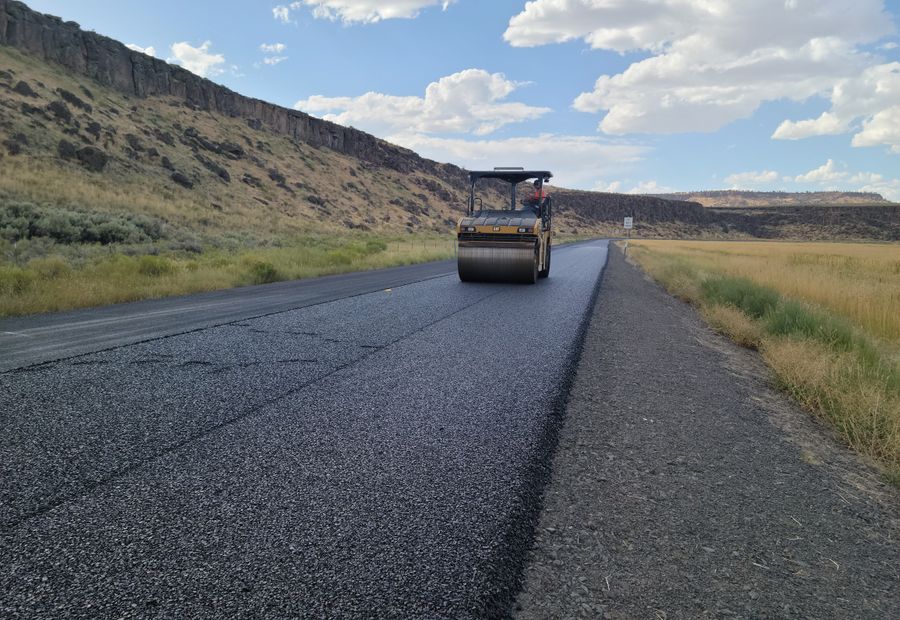
South Bend Driveway Paving resurfaces asphalt driveways and lays overlays, and we also handle replacement, patching and crack repair, first-time paving, sealcoating, gravel conversions, widening and aprons, and parking lots. Our work covers houses, rental property, and small commercial sites in South Bend, Mishawaka, Granger, Osceola, and the towns across St. Joseph County, Indiana.
An overlay is a surface course of hot mix asphalt, roughly two inches once compacted, bonded to the old driveway with tack coat sprayed just ahead of the paver. Milling cuts the old surface back where the drive meets the garage and where it meets the street, so the finished grade lands where it always was. Old material we take off leaves as reclaimed asphalt pavement. The alternative version of this job is a mat rolled straight over cracks and potholes with no tack, no milling, and no prep, which is a fresh color on an old problem.
When an Overlay Is the Right Answer
Three conditions have to hold. The base under the drive must still be doing its job. The water must run off rather than pond. The cracks must be single lines instead of a connected web, with no ruts pressed into the wheel paths. Meet all three and resurfacing gives you a new driveway surface for a good deal less than a replacement costs.
When It Is Money Burned
Fail any of those three and the new asphalt is going down over a failure. The cracks in the old surface find their way up through the new one, arriving in the same pattern and the same places. Ponding water still soaks the same base. Ruts reappear because whatever let them form is still under there. We will not sell that job.
Prep Is Most of the Work
Anything that has broken down gets cut square and rebuilt full depth first. Working cracks get cleaned out and filled. Vegetation coming up through a joint gets killed and removed, because it will come back through two inches of asphalt. Only then does the tack go down.
Milling the Transitions
Adding two inches everywhere means adding two inches at the garage threshold and at the apron. A garage door needs its clearance. A street edge needs to stay flush enough that a plow blade does not catch it. So we mill those transitions down before the overlay, and feather the new mat into them.
Compacted, Not Loose
Ask any bidder whether the two inches he quoted is measured off the truck or after the roller. Loose mix settles by about a quarter as it gets compacted. The difference between those two numbers is the difference between an overlay and a coat of paint.
Booking
We resurface from roughly May through October, when the plants are producing. Quotes happen year round. Call (574) 555-0148 and we will tell you which of your two options your driveway has actually earned.
Can you put a new layer of asphalt over old asphalt?
Yes, and often it is the smart call. The conditions matter though. The base underneath has to be solid, the driveway has to drain instead of holding water, and the surface cannot show a connected web of cracks or ruts under the tires. Meet those and an overlay buys you many good years for a fraction of a replacement. Miss them and the new layer cracks along the old lines within a few years. There is also a height problem nobody warns you about: an overlay lifts the drive by about two inches, so the garage door gap shrinks and a lip forms where the drive meets the street. Milling the transitions handles it.
How long does an asphalt overlay last?
Figure eight to fifteen years on a driveway whose base is genuinely sound, against fifteen to twenty or more for a full replacement. The base is doing the arithmetic, not the new asphalt. An overlay over a base that is quietly failing can start showing the old cracks again inside three or four winters. That is the whole reason we look underneath before quoting one.
What is tack coat and why does it matter?
Tack coat is a thin sprayed layer of asphalt emulsion that goes down on the old surface just before the new mix. It glues the two together so they behave as one pavement instead of two stacked slabs. Skip it and the new layer can slide, shove, and peel where cars turn their wheels. It is cheap, it is fast, and leaving it out is one of the easiest corners to cut on an overlay.
Do you have to fix potholes before resurfacing?
Yes. Failed areas get cut out and rebuilt full depth before the overlay goes on, and any working cracks get cleaned and filled. Paving over a soft spot just puts a fresh skin on it, and that spot will sink and break through the new surface first. The prep is the part of the quote worth comparing between contractors.