Asphalt Paving Contractor in South Bend, IN: Driveway Replacement, Paving and Repair
South Bend Driveway Paving is an asphalt paving contractor licensed and insured in Indiana, working residential drives across St. Joseph County. We do asphalt driveway replacement, resurfacing and overlays, patching and repair, new driveway paving, sealcoating, parking lot paving, gravel to asphalt conversion, and driveway extensions and aprons. Our customers own city houses, subdivision lots, rural acreage drives, rental property, and small commercial lots in South Bend, Mishawaka, Granger, Osceola, and the towns around them.
We build on No. 53 stone, the compacted aggregate base every plant in this part of Indiana sells under that name, laid in lifts on a compacted subgrade and run roughly six to eight inches deep. Hot mix asphalt goes over it in two courses. A binder course of coarse mix carries the load, then a finer surface course sheds water and takes the wear. A steel drum roller works both while they are still hot, because mix that cools stops compacting and starts to ravel. The other version of this job is a two inch mat rolled across a surface whose cracks already run right through it.
Call for a Free Estimate- Licensed and insured in IN
- No. 53 stone base compacted in lifts
- Binder course and surface course, both rolled hot
- Old asphalt torn out, hauled off, and recycled
- St. Joseph County and the Michiana area
Asphalt Driveway Replacement
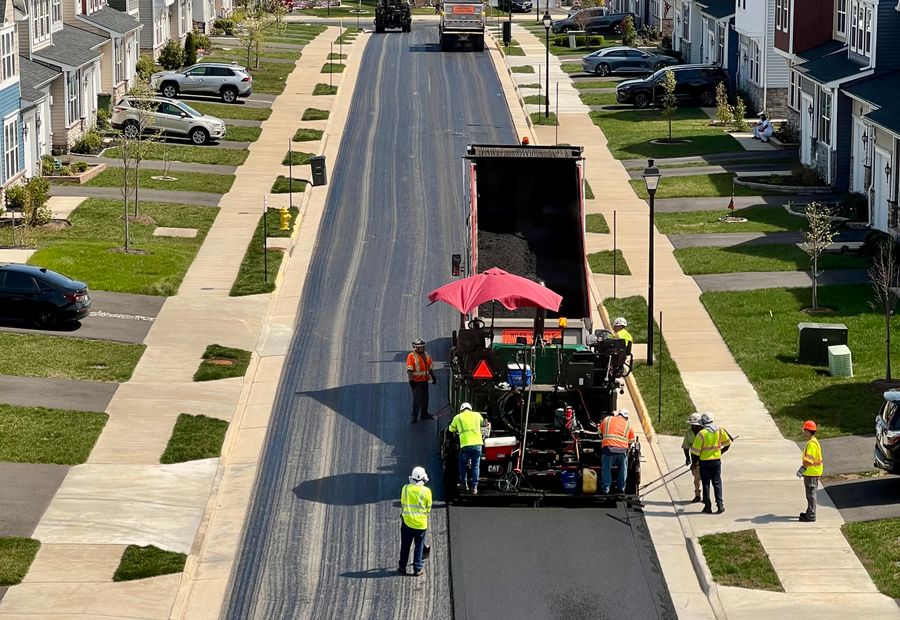
Replacement means the old driveway leaves the property. We tear out or mill the failed asphalt, load it, and haul it off to be crushed back into new mix. Then the subgrade gets compacted, the stone base goes back in, and two courses of hot mix go down on top of it.
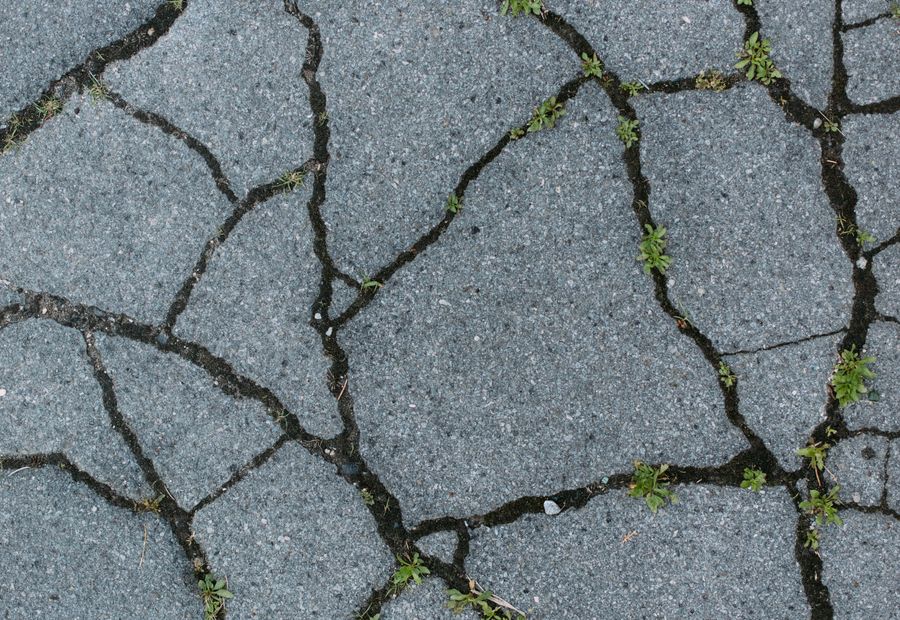
A driveway earns a replacement when the cracking runs in a connected web, when the surface holds ruts, when water sits after a rain, or when the whole drive has dropped. Every one of those is the ground under the asphalt telling you something. More on asphalt driveway replacement.
Asphalt Resurfacing and Overlays
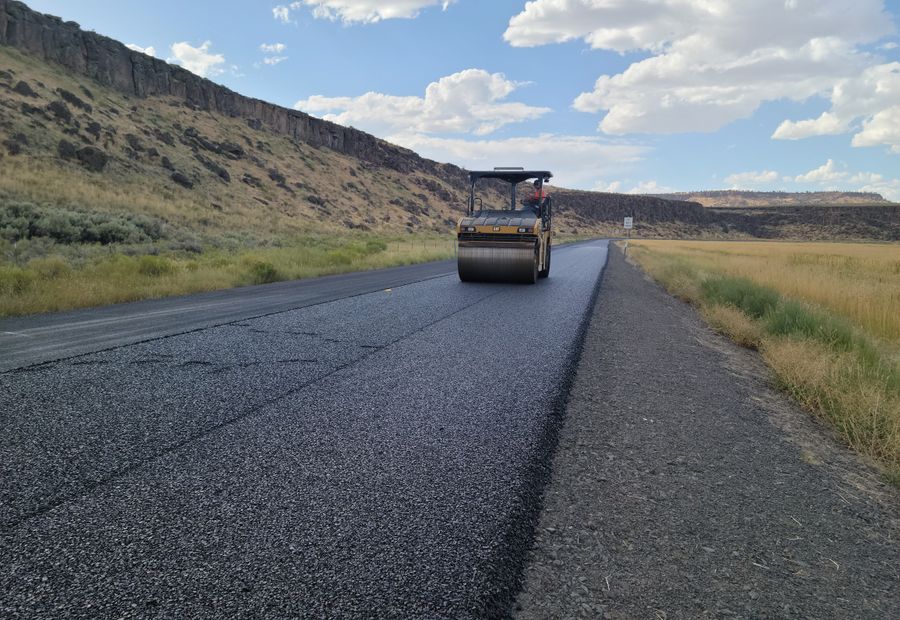
An overlay is a new surface course laid on the old driveway, tied down with tack coat so the two layers act as one. It is real work and it is the right answer on a drive whose base is still solid, whose water still runs off, and whose cracks are single lines rather than a web.
We mill the edges at the garage and the street first, so the finished grade lands where the old one did. An overlay that skips that step raises the drive by about two inches everywhere it touches. More on resurfacing and overlays.
Asphalt Patching and Repair
A pothole is a hole in the surface and a soft spot underneath it. We saw the failed area square, dig down to solid material, rebuild what is missing, and fill the cut with hot mix compacted in place. Cold patch out of a bag keeps a wheel out of the hole until somebody does that.
Cracks wide enough to take a finger get routed and filled with hot rubberized filler, which stays flexible while the crack opens and closes through the winter. More on asphalt patching and repair.
New Driveway Paving
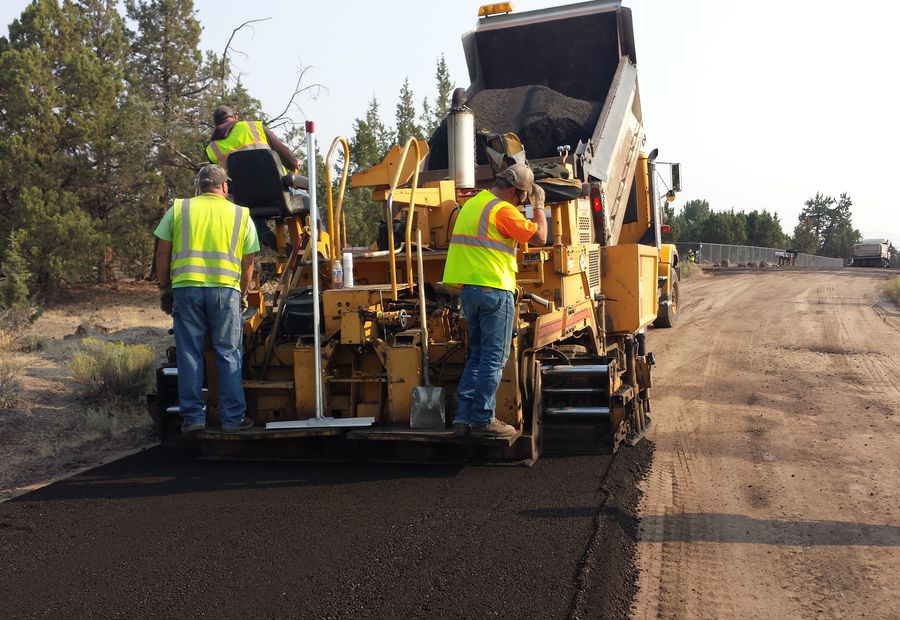
Paving raw ground starts with a stake line and a fall. We decide where the water goes before anybody digs, because pitch designed on paper is cheap and pitch fixed later is not. Then the topsoil comes off, the subgrade gets rolled, and the stone goes in.
Soft ground gets geotextile fabric under the stone so the base does not sink into the mud over the first few winters. Turnarounds, parking pads, and the tie-in at the road get laid out at the same time. More on new driveway paving.
Sealcoating and Crack Filling
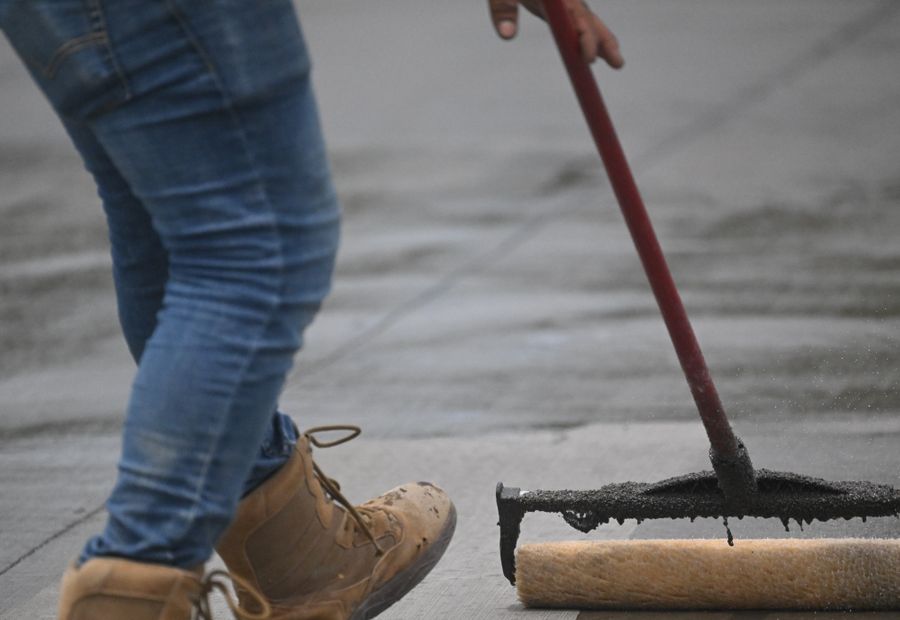
Asphalt emulsion sealer keeps water and sun off a sound surface. It fills nothing structural. It does not bridge a crack you can put a finger in, and it does not carry load. Every two to three years is the working interval here.
Cracks get filled before the sealer goes on, never after. New asphalt waits roughly six months to a year for its first coat while it cures. Sealer applied every single year builds up in layers, then cracks and peels off in sheets. More about sealcoating and filling cracks.
Parking Lots and Commercial Paving
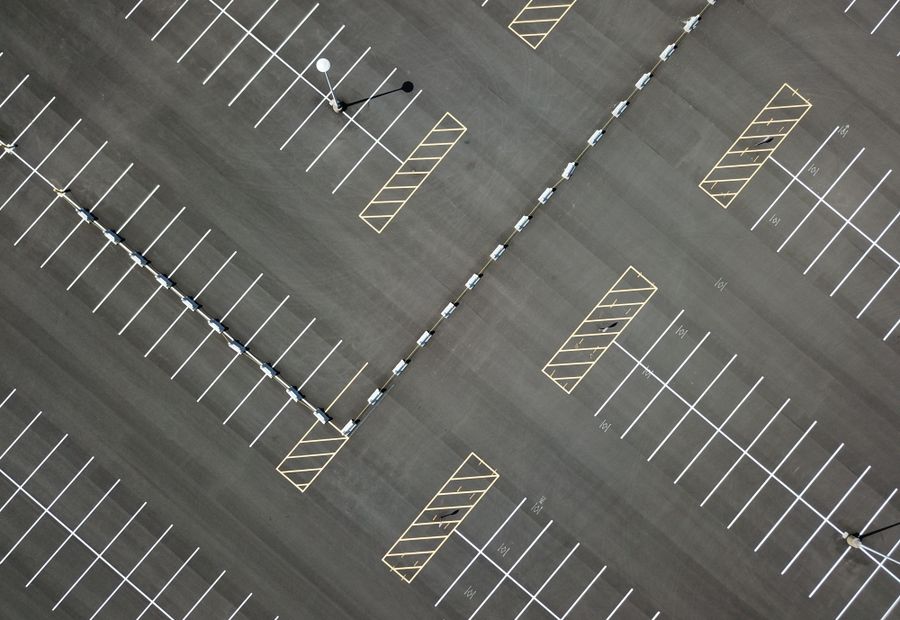
A lot carries loaded trucks, not cars. That means more stone under it and more asphalt over it, and it means the dumpster pad and the delivery bay get built heavier than the stalls. We are a paving contractor for property managers, churches, HOA boards, and small commercial owners.
Work gets phased so half the lot stays open, and it runs nights or weekends where the tenant needs the daytime. Striping and accessible stalls go back down after the mat cools. More about lots and commercial paving.
Gravel to Asphalt Conversion
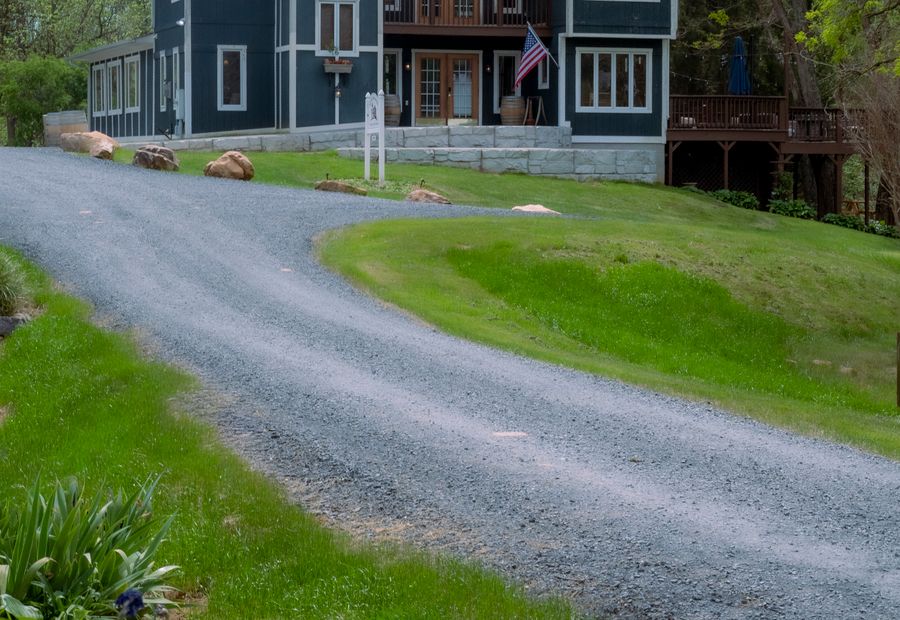
Homeowners assume the gravel already down there is the base. It rarely is. Years of traffic push stone into the dirt, dirt works up into the stone, and what is left is a mix that will not compact and will not drain.
We grade what is there, reclaim the stone worth keeping, add proper base material, and compact it in lifts before any asphalt arrives. On a long rural drive we will also tell you when a rebuilt gravel surface is the better spend. More on gravel to asphalt conversion.
Driveway Extensions and Aprons
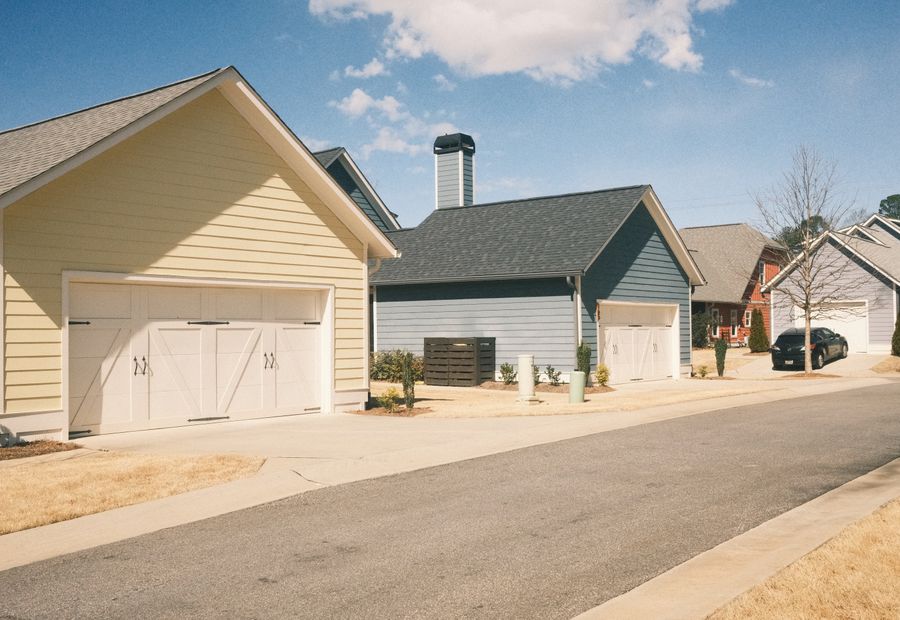
Widening for a second car, adding a parking pad, building a boat or RV pad, or turning a straight drive into a loop. The added section needs its own excavation and its own compacted base. Asphalt laid on undisturbed lawn sinks along the new edge.
The seam between old and new always shows, and we say so before we quote. It gets cut clean, tacked, and sealed so water cannot get down it. More on driveway extensions and aprons.
Why South Bend Homeowners Call Us
- We check the base before we quote a surface. A quote written from the curb is a guess about what is underneath. We look at how the drive cracked, where the water sits, and whether the drive has moved. Then we price the fix that matches. Start with asphalt driveway replacement.
- Compacted inches, not laid inches. Hot mix loses roughly a quarter of its depth under the roller. Our quote states compacted depth for the base and for each asphalt course, so you can hold it next to anyone else's. See resurfacing and overlays.
- Angular stone, not round gravel. Crushed stone has faces that lock against each other under a roller. Round river gravel rolls and stays loose. The base is where the price difference between two paving quotes usually lives. See new driveway paving.
- We will talk you out of sealer. On a surface that has broken into a web of cracks, sealer is a coat of black over a failure. We would rather quote the repair. See sealcoating and crack filling.
- We build the edge instead of trimming it. Asphalt has no curb behind it. We run the base past the asphalt, rake and roll the edge to a taper, and bring soil up level with it. See driveway extensions and aprons.
- We quote all year and pave when the plants run. Hot mix has to be laid hot and rolled hot, so the season here runs roughly May through October. Winter is for measuring and pricing. We will not promise you a January driveway.
Why Asphalt Driveways Fail
Most paving sites show you a photo of a black driveway. Almost none of them write down what is under it. Here it is.
Alligator Cracking Is Base Failure
A web of connected cracks that looks like reptile hide is not surface wear. It means the ground under the asphalt is moving every time a car drives over it. Asphalt is a flexible pavement. It spreads load down into the stone and the soil below, and it keeps water out. When the material under it stops holding still, the asphalt has nothing solid to sit on and it breaks up into that pattern. This is the single most useful thing a homeowner can learn about a driveway.
Nothing You Put On Top Fixes Something Underneath
Sealer, crack filler, and a fresh mat of asphalt all sit above the problem. Lay new asphalt over a cracked surface and the old cracks work their way up through the new layer, in the same pattern and in the same places, inside a few years. The trade calls that reflective cracking. It is the most expensive lesson in this business, and the homeowner pays the tuition twice.
Match the Fix to the Failure
| What the driveway is doing | What it needs |
|---|---|
| Surface sound, color gone gray, a few thin cracks | Crack fill, then sealcoat |
| Two or three potholes, everything else solid | Full-depth patch of those areas only |
| Surface worn and cracked, base solid, water runs off, no ruts | Overlay or resurface |
| Cracking in a web across much of the drive, ruts, ponding, crumbling edges, sinking | Full-depth replacement |
A contractor who quotes an overlay without looking at the base is quoting the cheap answer to a question he did not ask. Checking the base means reading the crack pattern, standing on the drive after a rain to see where water sits, looking for ruts under the wheel paths, and checking whether the edges have broken away.
The Base Is Half the Job
Under a residential driveway, figure roughly six to eight inches of compacted crushed stone sitting on a compacted subgrade. It goes in and gets rolled in lifts, not dumped and graded flat in one pass. Crushed stone is angular, so the pieces lock together under the roller. Round river gravel does not lock. It rolls.
Two Courses, Not One
Asphalt goes down twice. The binder course is a coarser mix, roughly two inches once compacted, and it does the structural work. The surface course is finer, roughly an inch and a half to two inches compacted, and it sheds water and takes tire wear. Three to four inches of compacted asphalt total is the working residential figure. A single two-inch lift is an overlay wearing a driveway's name.
Compacted Inches Versus Laid Inches
Hot mix comes off the truck loose and loses about a quarter of its depth as the roller works it. So a quote that promises three inches of asphalt without the word compacted is describing the truck, not the driveway. Ask any bidder which one he means. The answer tells you plenty.
Water Gets Under It, Then Freezes
Pitch is not decoration. A driveway needs a real fall across it so rain runs off instead of standing. Water that sits finds every seam and soaks into the base. Then winter arrives, that water freezes, expands, and lifts the asphalt above it. It comes back down in the thaw and it does not come back down level.
Edges Die First
There is no curb holding an asphalt driveway together. The edge carries a wheel with nothing behind it. An edge left standing proud, with a drop-off to the lawn, breaks off a piece at a time, and a plow blade takes the rest.
Height at the Garage and the Street
A replacement resets the grade to where it started. An overlay lifts it by about two inches, which can bury the bottom of a garage door and leave a lip where the drive meets the apron. Milling the transitions solves it. Nobody mentions it until the door will not close.
The Four Reasons a Cheap Driveway Fails
They are always the same four. Too little compacted stone underneath. Stone laid on soft or wet subgrade. Too little compacted asphalt over it. No fall for the water. Any one of them shortens the life of the drive. All four together will finish it inside a handful of winters.
How a Driveway Job Runs
Measure and Read the Drive
We measure the square footage, walk the crack pattern, look for ruts and low spots, and check the edges and the apron. We ask whether it holds water after a rain.
Written Quote With Depths On It
You get square footage, compacted base depth, compacted asphalt depth by course, what comes out, and what it costs. In writing, before anyone starts.
Tear-Out and Haul-Off
The old asphalt gets milled or torn out and trucked away. It goes back into the supply chain as reclaimed asphalt pavement rather than into a hole in your yard.
Subgrade and Stone
The subgrade gets shaped and rolled. Soft spots come out. No. 53 stone goes in and gets compacted in lifts, with the fall set before a drop of asphalt shows up.
Pave Hot, Roll Hot
Binder course first, then the surface course, both compacted while they are still hot. Edges get raked to a taper and rolled. Then we tell you when to drive on it.
What an Asphalt Driveway Costs Around South Bend
Asphalt prices by the square foot. Measure the length times the width and you have the number that drives everything else. A short two-car drive and a long rural run are not the same job even at the same price per foot, because one of them needs a truck to turn around somewhere.
| Work | Typical Range | Notes |
|---|---|---|
| Full-depth driveway replacement | $6 - $10 per square foot | Tear-out, haul-off, rebuilt stone base, two courses of hot mix |
| Resurfacing or overlay | $3 - $5 per square foot | Only where the base holds and the drive still sheds water |
| New driveway on raw ground | $5 - $9 per square foot | Excavation, base, two courses. Nothing to tear out |
| Gravel drive converted to asphalt | $5 - $9 per square foot | Long rural runs move with how much stone has to come in |
| Full-depth pothole patch | $300 - $900 each | Cut square, dug to solid material, hot mix compacted in the cut |
| Hot rubberized crack filling | $400 - $1,200 | Priced by how much working crack there is to rout and fill |
| Sealcoating | 20 to 45 cents per square foot | Every two to three years on a surface that is still sound |
| Extension, widening, or new apron | $1,500 - $6,000 | New section gets its own excavation and its own compacted base |
What moves the price:
- Total square footage, because the mobilization spreads across it
- Compacted asphalt depth, and whether it goes down in one course or two
- Compacted base depth, which is where two quotes usually differ
- Whether an old driveway has to come out and get hauled away
- How much grading and how much dirt has to move
- Access for a triaxle and a paver, and whether the crew is hand-working tight spots
- Drainage work, swales, or a culvert at the road
Frequently Asked Questions
How long does an asphalt driveway last?
Fifteen to twenty years is the realistic answer, and a well-built drive that gets maintained runs past that. Build is the determiner, not luck. The driveways that die young around here are the thin ones on a shallow base, and no amount of sealer saves one of those. Winter is the load that finds the weakness. It is not the excuse.
How often should you sealcoat a driveway?
Every two to three years. Sealing every spring is not extra care. The layers build on each other, go brittle, and start peeling off in sheets that look worse than bare asphalt. A new driveway waits roughly six months to a year before its first coat so the mix can cure. And sealer protects a surface that is still sound. It does nothing for a base that has given up.
Asphalt or concrete driveway, which is better?
Both are good and they trade off. Asphalt costs less up front, goes down in a day or two, and flexes with ground movement instead of cracking hard. It also patches and resurfaces easily. Concrete lasts longer, asks for less attention, and costs more to put in. In a climate that freezes and thaws all winter, the flex is worth real money. We pave asphalt, so ask a concrete contractor for his side of it.
When can you pave a driveway in northern Indiana?
Roughly May through October. Hot mix leaves the plant near three hundred degrees and has to be laid and rolled before it cools, and cold ground pulls the heat out of it before the roller gets density. The plants shut down for winter, which settles the question. Measuring and quoting happen in any month, and the spring calendar fills from the front.
Do I need a permit to replace my driveway?
Swapping a driveway for a new one on the same footprint usually needs nothing. Widening it, extending it, or touching the apron where it meets the road often does, because the right-of-way at the street belongs to the city or the county rather than to you. We confirm it with the right office before anyone digs, and we do not guess on your behalf.
How soon can I drive on a new asphalt driveway?
Cars can usually go on within a day or two once the mat has cooled through. Keep heavy trucks, trailer jacks, motorcycle kickstands, and turned wheels off it for longer than that. Fresh asphalt keeps curing for months and it stays soft in hot sun that first summer. Point sharp weight at a warm new surface and it leaves a dent you keep.
Do you work in Michigan?
Michiana is one market and the state line runs through the middle of it, so we get this question constantly. Niles sits just over that line in Berrien County. Call us and we will tell you straight what we can take on that side and what we cannot, before you spend time on it. Indiana licensing and insurance does not carry across a border by itself.
Are you licensed and insured?
Yes, in Indiana, and the paperwork comes to you or your property manager on request. You also get a written estimate first, showing the square footage, the compacted base depth, the compacted asphalt depth, and the price. Nothing starts before you have that in hand.
Lake-Effect Snow and Clay Ground
South Bend sits about twenty miles from the bottom end of Lake Michigan, and the weather knows it. Cold air crosses open water and drops snow on this county all winter, more of it than any other city in Indiana gets and more than Chicago or Detroit see. That snow does not fall once and leave. It piles, it melts in a warm stretch, and the meltwater runs into every crack and seam in a driveway.
Then it refreezes. The freeze-thaw season here runs November through March, and the ground crosses the freezing line and back dozens of times before spring. Each pass widens the cracks a little. Water gets in, turns to ice, takes up more room than it did as water, and pushes the asphalt apart from the inside. A crack that took a fingernail in November takes a finger in April.
Frost drives past three feet into the ground in St. Joseph County, and what it drives into is the second half of the story. Northern Indiana sits on clay-heavy glacial till. Clay sheds water instead of taking it down, so runoff travels sideways toward low spots and toward the edges of a driveway rather than soaking away. That is base saturation waiting for a cold night.
This is why base depth is the whole argument here and not a sales point. Clean crushed stone holds far less water than the clay it replaced, and what it does hold has somewhere to go. A drive built on a skim of stone over that clay lifts every winter and settles crooked every spring. A drive built on a proper depth of compacted stone, with a real fall across it, gives the water a way out before it can freeze.
Spring is when the phone rings. The frost comes out of the ground, the melt runs through everything, and the driveways that were going to break, break. We quote through the winter and pave once the plants fire back up. Cold or saturated ground moves a start date, and we would rather tell you that in March than in the middle of your job.
Asphalt Paving Across St. Joseph County
We pave driveways across St. Joseph County, Indiana, and into the Michiana area around it. That covers Mishawaka on the river directly east of us, the newer subdivisions at Granger to the northeast, the county town of Osceola, New Carlisle out west in Olive Township, and the county towns south and southwest at North Liberty, Lakeville, and Walkerton. Niles sits over the state line in Berrien County, Michigan, inside the same metro. Bring us a driveway anywhere on that list.
Ready to Get Your Driveway Measured?
Call (574) 555-0148 and we will come measure it. Tell us roughly how long and how wide the drive is, what it is doing now, and whether water stands on it after a rain. We will tell you whether you are looking at crack filling, a few patches, an overlay, or a full replacement, and you will get the square footage and the compacted depths in writing. We measure and quote in every month of the year and pave when the plants are running.