Gravel to Asphalt Driveway Conversion in South Bend, IN
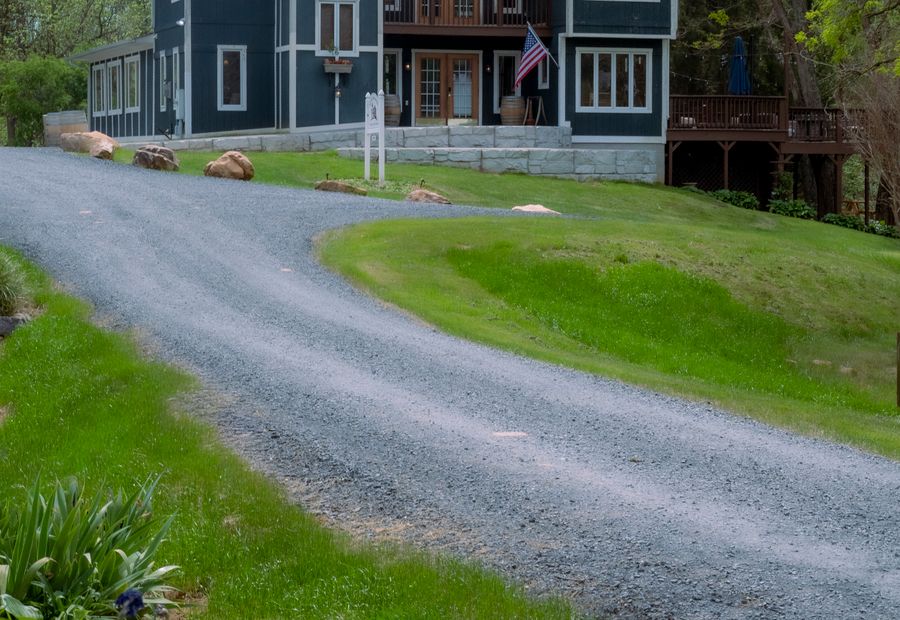
South Bend Driveway Paving converts gravel driveways to asphalt, and also handles driveway replacement, resurfacing, patching and crack filling, first-time paving, sealcoating, extensions and aprons, and parking lots. Conversion work takes us out to acreage and farm property around New Carlisle, North Liberty, Lakeville, Walkerton, and the rural parts of St. Joseph County, Indiana, as well as older lots inside South Bend that never got paved.
We start by finding out what the existing stone is worth. Material still clean enough to serve gets reclaimed and regraded into the run. The rest gets topped with fresh dense-graded aggregate base, shaped to a crown or a cross fall, and compacted in lifts with a steel drum roller. Soft or wet stretches get geotextile fabric under the stone so the base and the clay stay apart. Then two courses of hot mix go over it. That is a different job from spreading two inches of asphalt across an old gravel lane and rolling it.
Why the Old Gravel Is Rarely the Base
A gravel drive gets its stone pushed into the ground a little more with every load that crosses it. Soil rises through the gaps at the same time. After a decade the top layer is part stone and part dirt, and that blend behaves like neither. It holds water, it does not lock under a roller, and asphalt laid over it has no foundation.
Long Runs Price Differently
A rural driveway can carry more square footage than the house it serves. The cost lives in the stone: how many loads come in, how far they travel, and how many passes the roller makes. Access matters too, because a paver, a roller, and a line of triaxles have to get down the run and turn around at the end of it.
Ditching and Shoulders
Water is the whole problem on a country drive. The run needs a crown or a fall so rain leaves the surface, and it needs somewhere for that water to go once it does. We cut or clean the ditch lines and build the shoulders up level with the finished edge, because an asphalt edge with a drop-off behind it breaks away one winter at a time.
The Culvert at the Road
Where the drive meets a public road, the crossing pipe and the apron are their own piece of work, and the right-of-way at that end belongs to the county or the town. We check what is required with the correct office before anyone digs there.
The Alternative
Not every long drive should be paved. A properly crowned and ditched gravel run with fresh angular stone on it is a legitimate answer, and it costs a fraction of asphalt. Call (574) 555-0148 and we will price both.
Can you pave right over my gravel driveway?
Almost never, and anyone who says yes without walking it has not looked. What is under a gravel drive after years of use is not clean base stone. Traffic drives the stone down into the soil and works soil up into the stone, so the top few inches end up a mix that will not compact and will not drain. Some of it is worth reclaiming and regrading. All of it has to be tested, shaped, and topped up with proper base material and compacted before asphalt makes any sense.
How much does it cost to convert a gravel driveway to asphalt?
It prices per square foot, and a long rural drive gets expensive fast simply because of how many square feet it holds. The big variables are how much of the existing stone is salvageable, how much new base material has to be trucked in, how much shaping and ditching the run needs, and whether a culvert at the road is part of it. A short suburban conversion and a quarter mile farm lane are not the same conversation.
Is a rebuilt gravel driveway a reasonable alternative?
On a long rural run, sometimes it is the better spend and we will tell you so. A gravel drive that is properly crowned, ditched on both sides, and topped with fresh angular stone drains well and handles farm traffic that would chew up thin asphalt. It costs a fraction of paving. The trade is ongoing maintenance and dust. We quote both when the length makes the choice a real one.
How wide should a rural driveway be?
Wider than most people first plan. A single lane feels fine until a delivery truck, a propane tank, or a fire apparatus needs to get in and back out. Long runs also benefit from a pull-off or two so vehicles can pass. Width drives the square footage and the square footage drives the price, so this is worth deciding before we measure rather than after.