Asphalt Driveway Repair in South Bend, IN
South Bend Driveway Paving repairs asphalt driveways and also replaces them, resurfaces them, paves new ones, sealcoats sound surfaces, converts gravel drives, builds extensions and aprons, and paves parking lots. We work for homeowners, landlords, and property managers across South Bend, Mishawaka, Granger, Walkerton, Lakeville, and the rest of St. Joseph County, Indiana. This is straightforward asphalt contractor work and most of it happens in a day.
Potholes get cut square with a saw, dug out to material that holds, rebuilt with compacted stone where the base is missing, then filled with hot mix asphalt and compacted in the cut with a vibratory plate compactor. Cracks get routed clean and filled with hot rubberized crack filler, which melts in and stays flexible as the crack opens through the winter and closes in July. Cold pourable filler out of a jug goes brittle and pulls loose by the second season. Neither of those is the same thing as throwing a shovel of cold patch into a hole and driving over it.
A Pothole Is a Symptom
The hole you see is the last step. It starts when water gets under the asphalt and softens or carries away what was holding it up. The asphalt over that void loses support, flexes, breaks, and a wheel finishes the job. That is why the repair goes deeper than the hole does.
Cracks, and Knowing When You Are Past Them
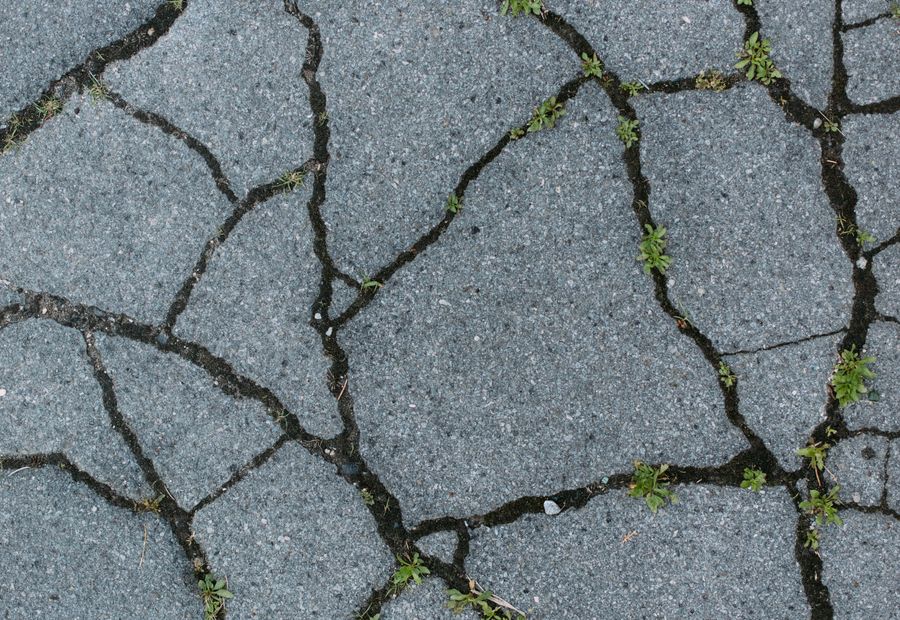
Single cracks running with the drive or across it are worth filling and worth filling early, because every one of them is an entry point for water heading toward the base. Once those cracks join into a connected web across a broad area, filling them is housekeeping. The message the pattern is sending is about what is underneath.
Sunken Sections and Low Spots
A dip that holds water after a rain means the material below has consolidated or washed out. Skimming asphalt into the low spot leaves the void in place and the dip returns. Fixing it means opening the area, dealing with what is under it, and rebuilding from there up.
Edges and the Apron
Driveway edges crumble because there is nothing behind them. We cut the ragged edge back to sound material, patch it, and build the shoulder up with soil so the taper is supported. The apron at the street takes the worst of the plow and the turning traffic, and it gets repaired the same way.
Where Repair Stops Making Sense
Add up the patches. When the failed areas cover a large share of the drive, when the cracking has gone to a web, when ruts have set in, or when water stands in more than one place, patching becomes a payment plan on a replacement. We will do the math with you out loud.
Booking
Hot mix repairs need the plants open, roughly May through October. Crack filling has a slightly longer window. Call (574) 555-0148 and describe what the driveway is doing.
Is cold patch a permanent pothole repair?
No. Cold patch is asphalt you can shovel out of a bag at any temperature, and it is designed to hold a hole together until proper work happens. It never bonds to the sides of the hole the way hot mix does, and traffic and plow blades pull it out again. It is genuinely useful in February when nothing else is available. It is not a repair you should be paying a contractor for in July.
When is a crack worth filling?
Fill it while it is still a line you can trace. Cracks about a quarter inch wide up to roughly an inch are ideal candidates, because they are wide enough to route and fill and narrow enough that the base beneath is probably fine. Once cracks connect to each other into a web, filling them treats the symptom. At that point the ground under the driveway is what needs attention.
Why does the same pothole keep coming back?
Because the hole was filled and the reason for it was not. A pothole starts underneath, where water has softened or washed out the material supporting the asphalt. Drop new mix in the depression and you have covered a void. It sinks again on the next wet freeze. A repair that lasts means cutting the failed area out square, digging down to material that is actually solid, rebuilding it, then compacting hot mix into the cut.
Can you repair the trench where the utility company dug up my driveway?
Yes, and it is common work. A utility cut is usually backfilled fast and compacted lightly, so the trench line settles over the following year and the patch drops below the surrounding surface. We saw the edges back to sound asphalt, rebuild the trench with properly compacted material, and fill it with hot mix rolled flush. Then the seams along both sides get sealed, because that is where water heads first.